Enlight
Short-form learning app that makes education as addictive as the feed (team of 4)
2024. 2-week sprint. CEO, product and design lead. Won 1st of 13 at the Wharton pitch competition.
Case-Study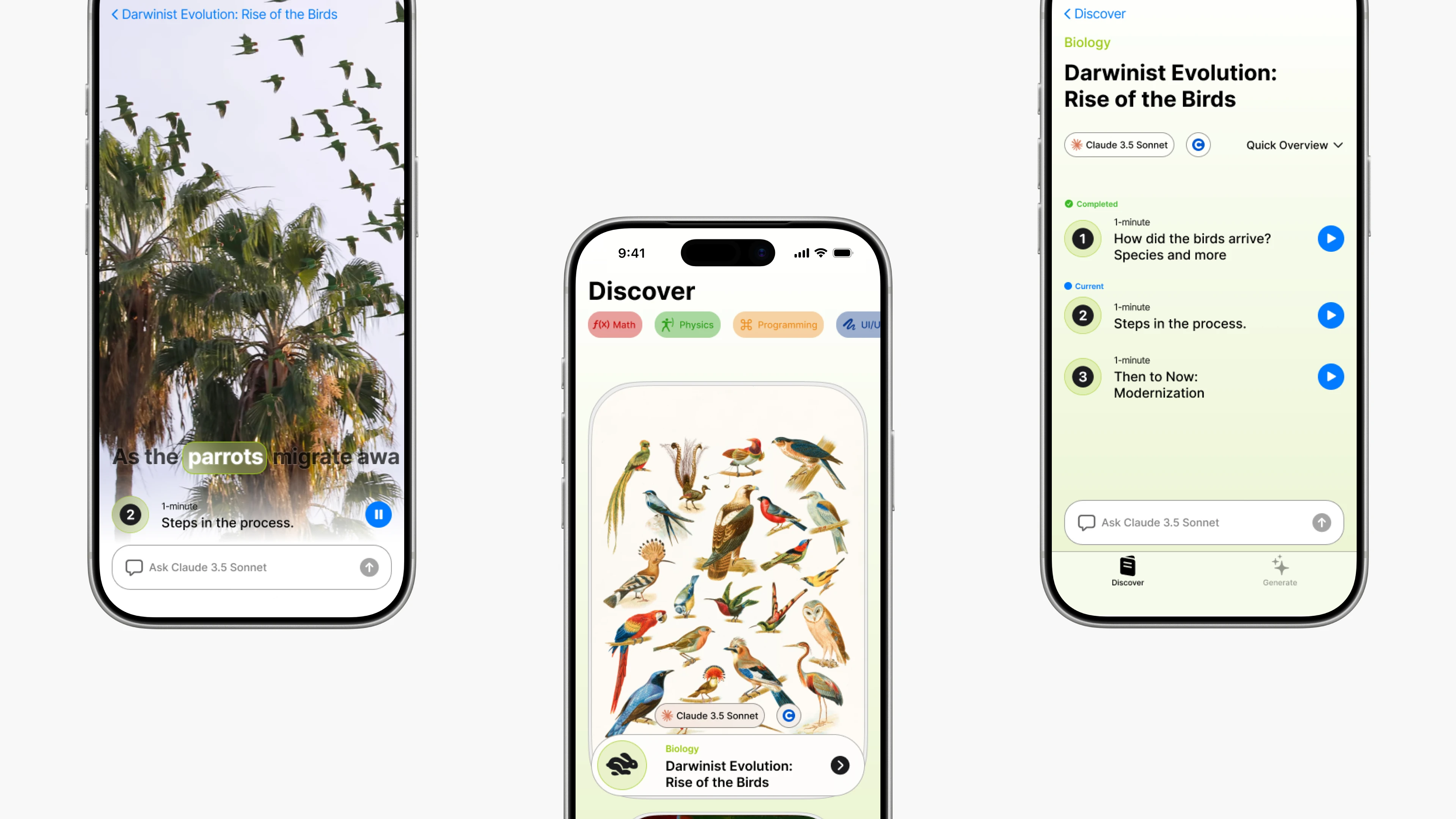
Thesis
Attention is the scarcest resource in learning, and social media already won the war for it. Enlight's bet was to stop fighting the feed and teach inside it.
Intent
I love learning. But when short-form social media took over, it started beating the things I loved: I'd sit down to read a scientific paper and feel a stronger pull to just scroll. So I asked an uncomfortable question. The algorithms behind that pull are the most effective persuasion technology ever built, and they're aimed at exploiting the person. What if you turned them around and pointed them at something good? I led a team of four, as CEO, to design it and pitch it, and we won first out of thirteen at the Wharton pitch competition. It comes from what I believe about all my work: design for people, never users, even when you're borrowing the tools built to exploit them.
Insight
I drew the idea for the team as a shape. Picture a person as a ridged surface: every peak a skill they already have, every trough a gap. Most education piles more material onto the peaks, teaching people what they half-know already. Enlight was the other half of the rectangle, the inverse shape that completes the surface by filling the troughs and leaning on the peaks. An engineer learning to sculpt doesn't need mechanical intuition for what will physically stand, they already have that; they need the artistic intuition for what their intention actually expresses. Personalization, done honestly, means teaching only that gap.
Decisions
1
Decision 1: Name it Enlight, after the Enlightenment, and leave the rest open.
The Enlightenment was the stretch of history when learning, innovation, and creation peaked together, and that's the promise in the word. I left it open past that on purpose: people read "light" and illumination into it on their own, and that room to interpret is part of what makes a name hold.
Rejected: literal edtech names (-Academy, Learn-, -Ed) that sound like the homework people are avoiding, and pinning the name to one fixed meaning.
2
Decision 2: Teach inside the feed: short-form and scrollable.
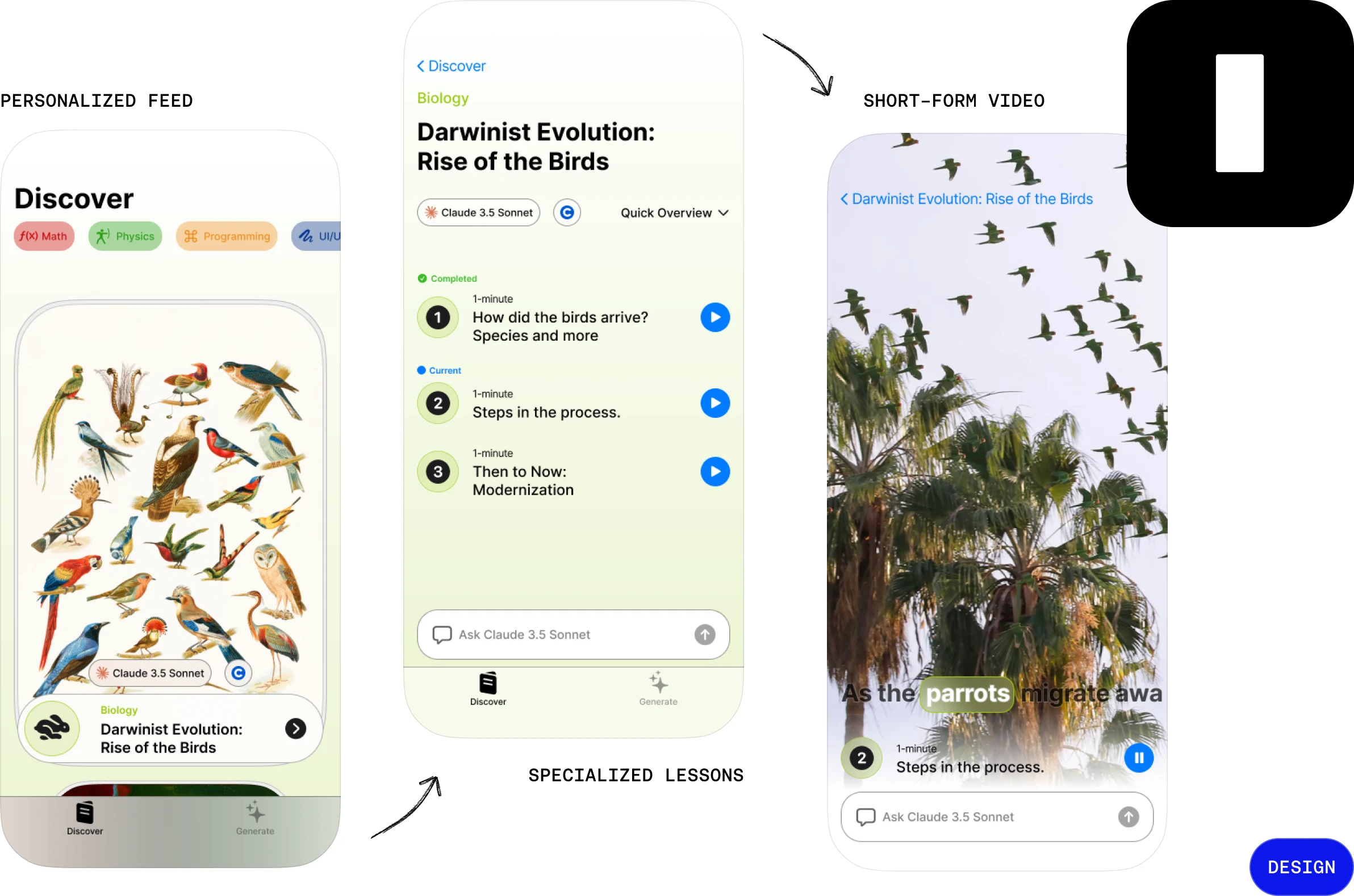
We met attention where it already lives. Enlight is a Discover feed you swipe, not a syllabus you enroll in.
Rejected: the course/LMS model every edtech defaults to, which demands commitment before it earns any.
3
Decision 3: Let the constraints of the moment reshape the product.
We designed it to run on Claude, the model we wanted at the core, but at the time Claude was extremely early and video generation was far off and expensive. Generating a bespoke lesson for every gap wasn't reachable yet. So instead of waiting, we pivoted to the version the technology could actually support: digesting companies' corporate onboarding into short-form, scrollable lessons, cutting everything that would just stack onto what people already knew, and doubling down on the parts that filled their real gaps. The constraint sharpened the product instead of stalling it.
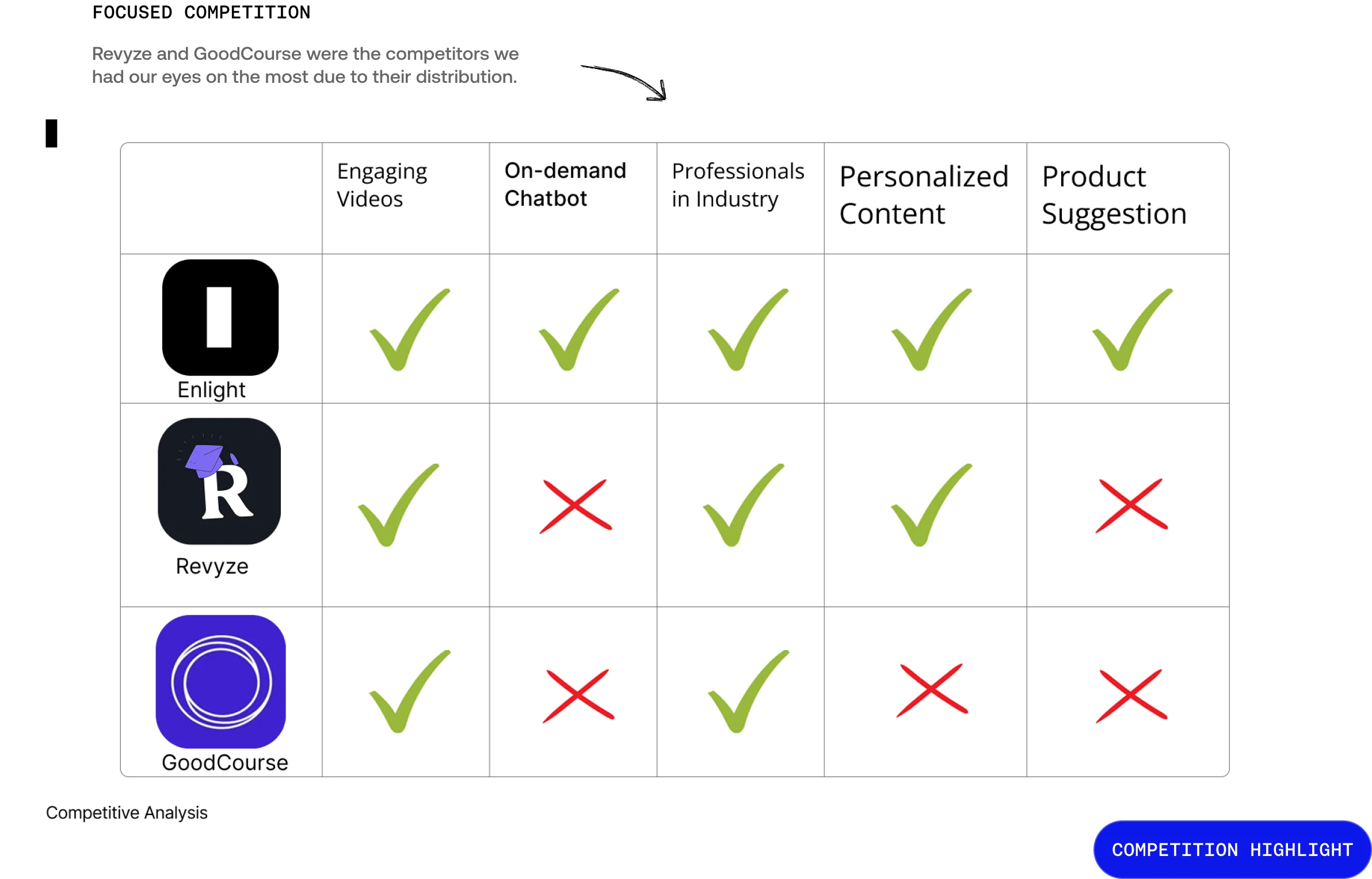
Rejected: holding out for the fully generative tutor the technology couldn't support yet, and the lazier build that ships all the onboarding flat, peaks and troughs alike.
4
Decision 4: The launch video sold the feeling, not the features.
The goal was to make people feel the possibility of learning anything effortlessly, because possibility persuades and a spec sheet doesn't.
Rejected: a conventional product walkthrough.
Craft

The Motion Study
Where I'd take the mark next: A door, expanding to fill the space while the app loads, creating a sense of limitlessness.
 Motion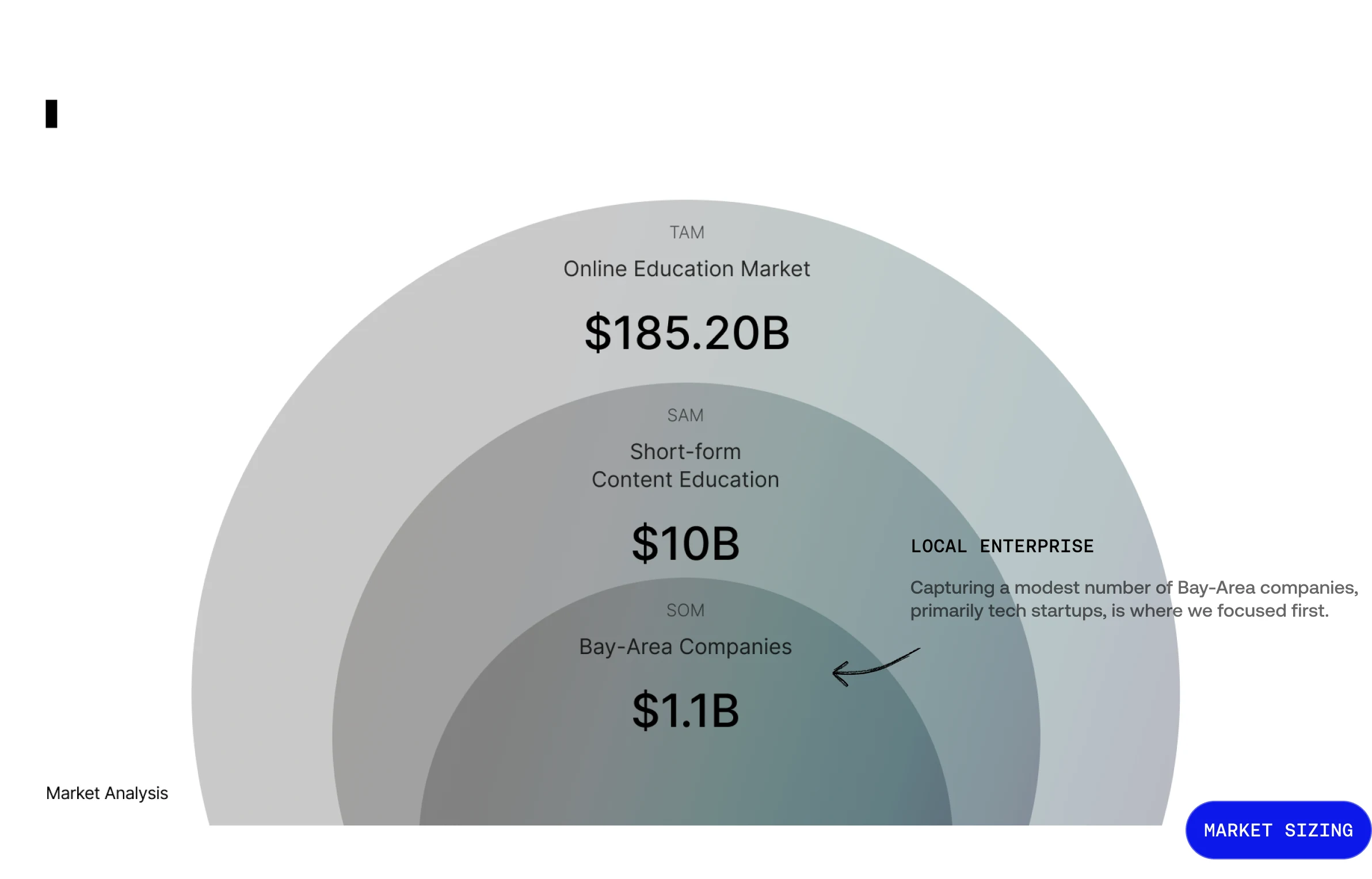
Where I Went Wrong
I was pushing hard for the consumer product. That was the part that excited me, the version that would eventually scale and help the most people. My CTO stopped me with a cost breakdown that showed the consumer side just wasn't feasible at the economics we had. He was right, and I let go of the version I was attached to. Taking his point, I asked the question that reset our near-term path: what if we digested and spliced existing video instead of generating it? That turned us toward enterprise, and it still delivered real value under the constraints we actually faced.
Outcome
Two-week sprint, first of thirteen at Wharton. This is the earliest work here, and the craft shows its age next to my other work; what holds up is the thinking, the shape of the idea and the willingness to let a hard constraint reshape the product instead of breaking it. We knew we were entering behind the first-movers, and bet the approach would matter more than being first. That's a call I'd make again.