Echo
Music-syncing infrastructure build (team of 5)
2026. 3-month timeline. Group lead, product and design. Built in a university course.
Case-Study
Thesis
Every group-music product dies on the same wall: copyright. Echo's bet was to route around it entirely, don't share the song, share the timing.
Intent
Echo started from a feeling. Music was in nearly every moment my friends and I actually remember, and yet listening together ends the second everyone has their own phone and their own app. The purpose was community, and music was the thread running through our best memories, so music became the whole product. I led a team of five to make belonging the default: a way for a room to listen as one, no matter whose account or which platform.
Insight
The legal wall everyone hits is the transfer of copyrighted audio, so we never transfer it. Each person's own Spotify or Apple Music plays on their own device, and Echo was architected to synchronize the timing in a way that sidesteps latency rather than fighting it directly, until a room full of separate apps becomes one sound. We don't touch the file. We conduct it.
Decisions
1
Decision 1: Share the timing, not the song.
Routing playback through each person's own licensed account sidesteps copyright completely, and the architecture sidesteps latency too, syncing timing rather than chasing it. With a calculated delay across devices, a shared queue can play through a single speaker, or every phone's output can lock together until a dozen of them sound like one.
Rejected: streaming or transferring audio ourselves, legally dead on arrival, and the reason no one had built this.
2
Decision 2: Treat time-to-music as the only metric.
Everything bent toward how few seconds passed before a room was listening together: log in with Spotify or Apple Music, no Echo account to create, and an NFC tag you tap to join a Chamber. The interface stays simple and familiar so there's nothing to learn.
Rejected: our own accounts, codes and QR fiddling, any friction between "let's listen" and music.
3
Decision 3: The nomenclature: Echo, Chambers, justecho.us.
Echo is reflection and repetition, the literal effect. Chambers flips the echo chamber on its head: instead of people reflecting the same opinions back at each other, they reflect good taste back at each other, the same loop turned generous. And the domain, justecho.us, reads as the catchphrase: "just Echo us."
Rejected: generic social-music names with nothing to discover.
4
Decision 4: The mark: feeling-led, then left open.
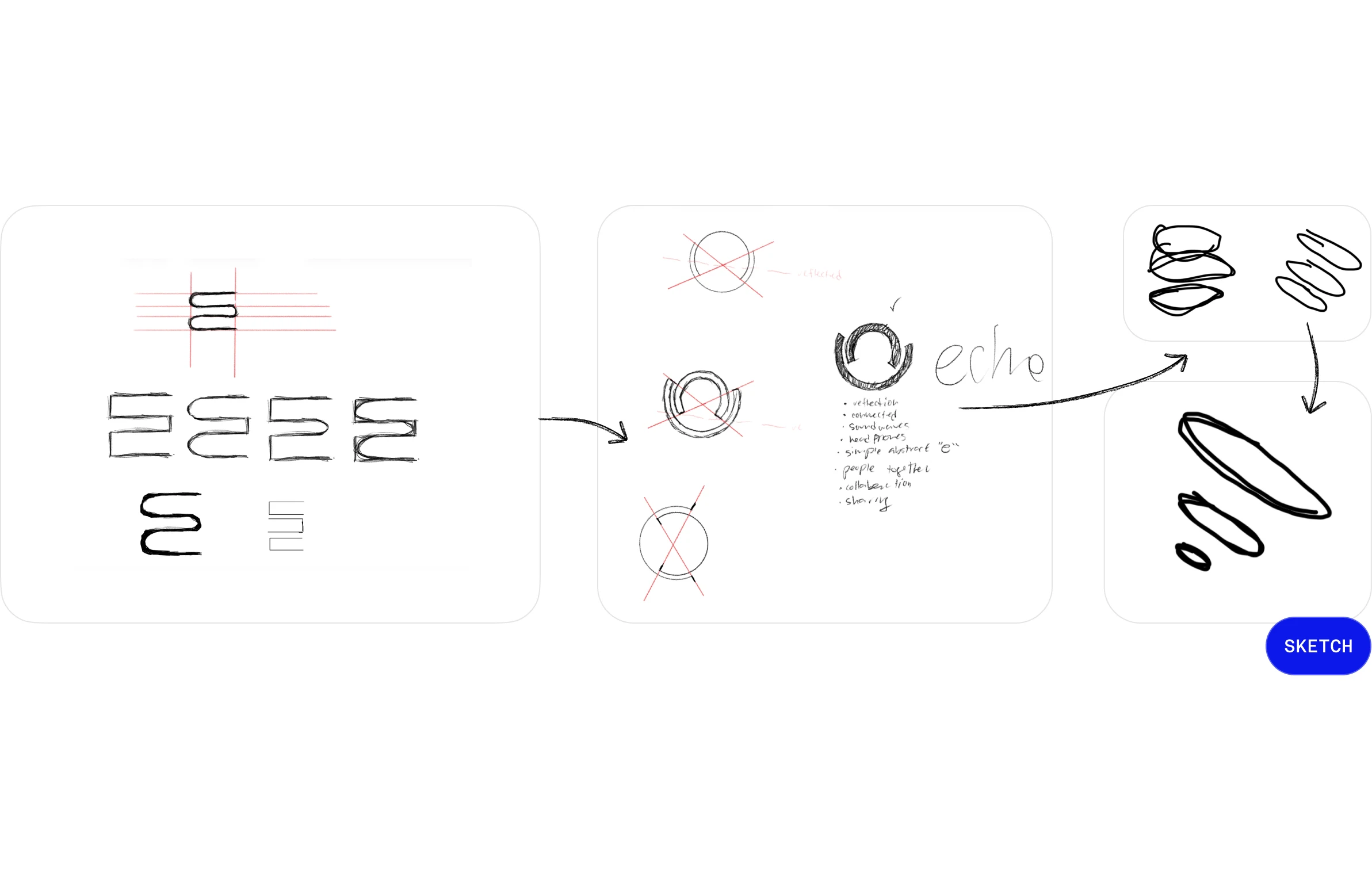
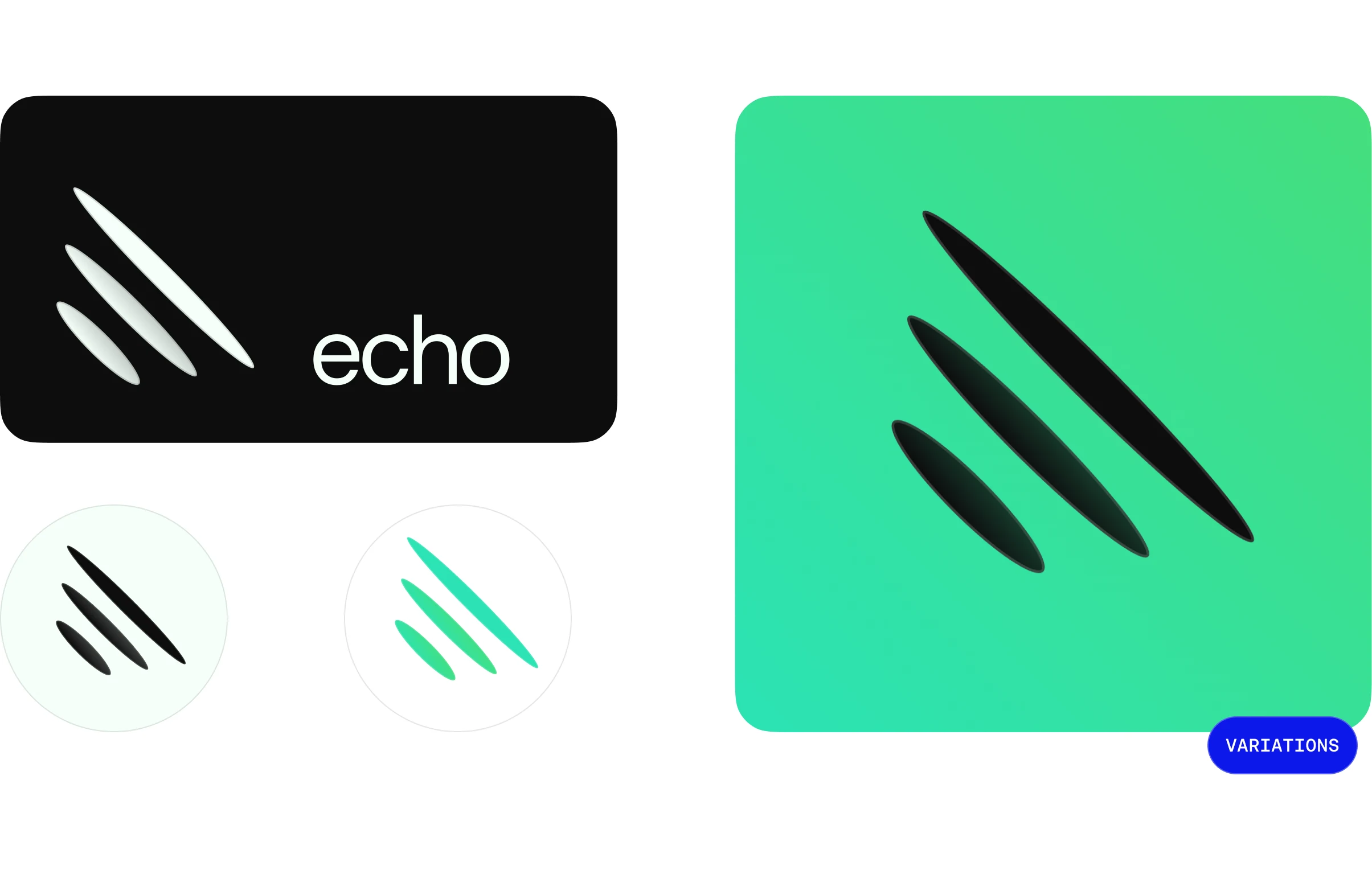
I set the criteria before the pen moved, reflection, connected, soundwave, headphones, an abstract "e," people together, and let feeling lead from there. It resolved into three lines that read as soundwaves, motion, reflection, and an "e" at once, with enough ambiguity left in that people finish it themselves.
Rejected: the literal circular and refresh-arrow concepts I sketched early and killed for being too trivial.
5
Decision 5: The color: green into teal.
Sound is a medium for emotion and connection, so the color had to carry the life Echo breathes into a moment. I landed on a saturated sea-foam, green moving into teal, alive rather than clinical.
Rejected: a single cool-color palette that would make a feeling product look like a utility.
Craft
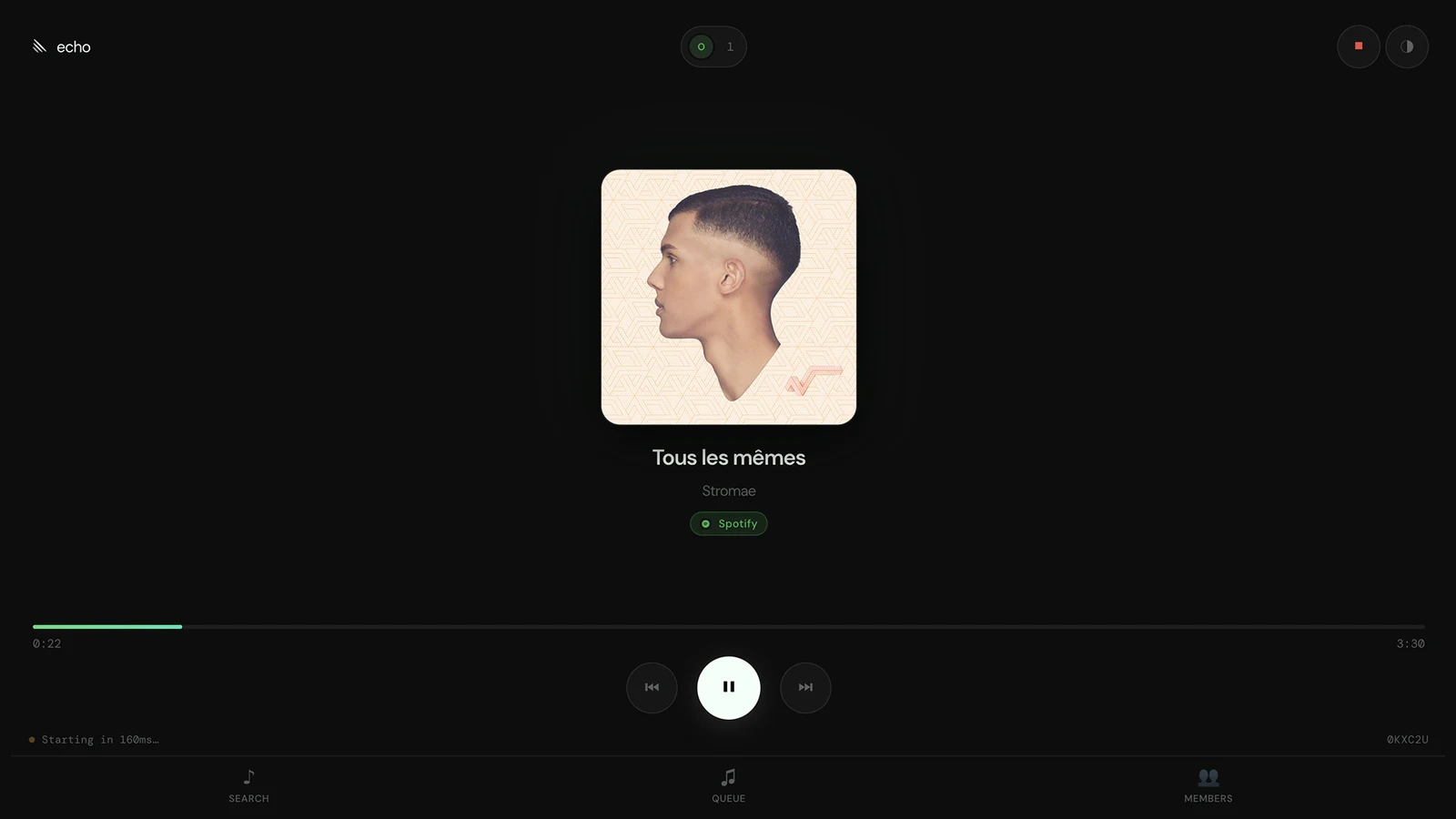
Chamber Interface
The synced now-playing: one shared queue, while each person's own Spotify or Apple Music plays on their own device, locked to the same timing.
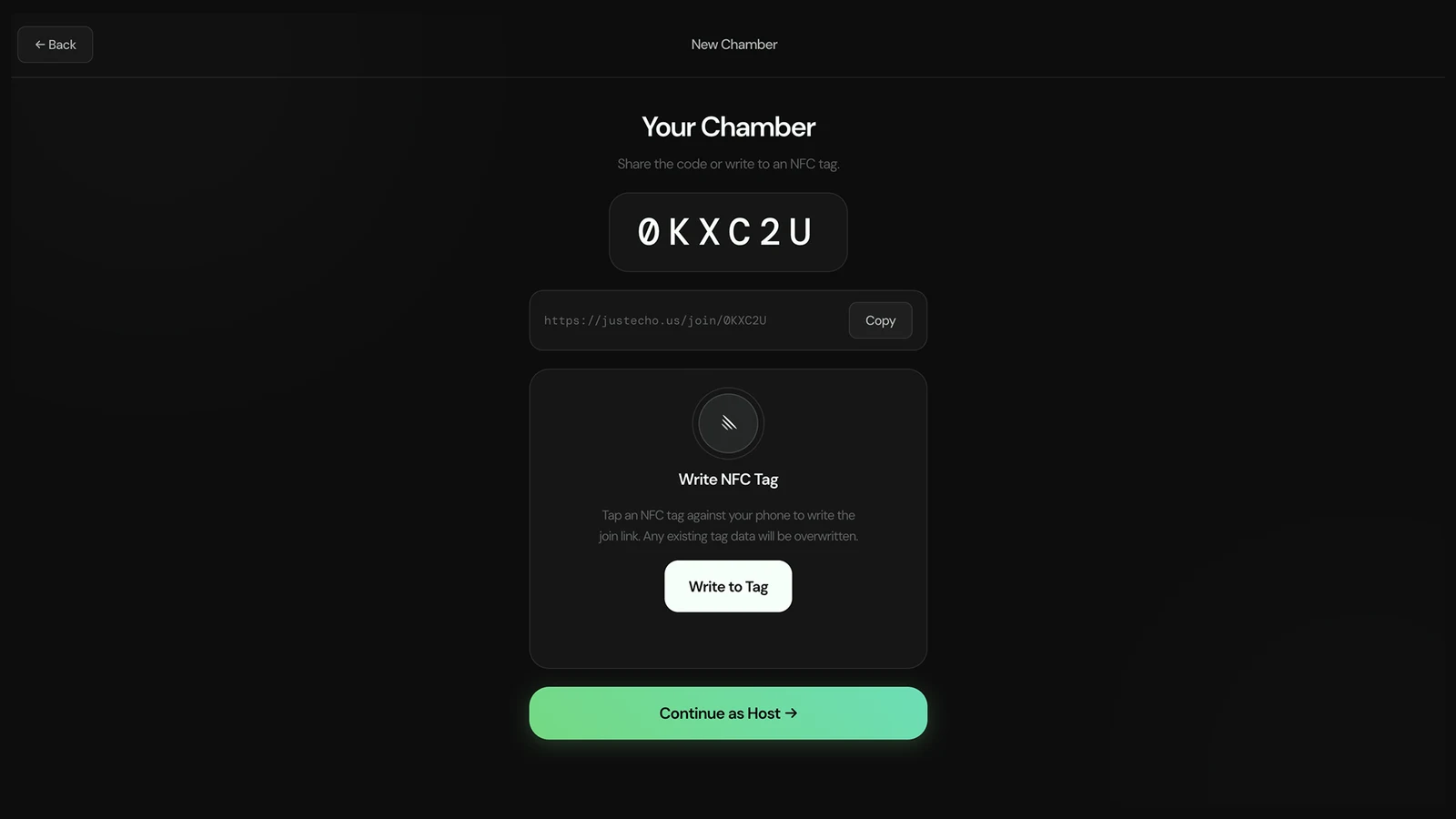
Join Interface
Create a Chamber or join one with a code, or tap an NFC Echo tag to join instantly. No Echo account to create.
The Why
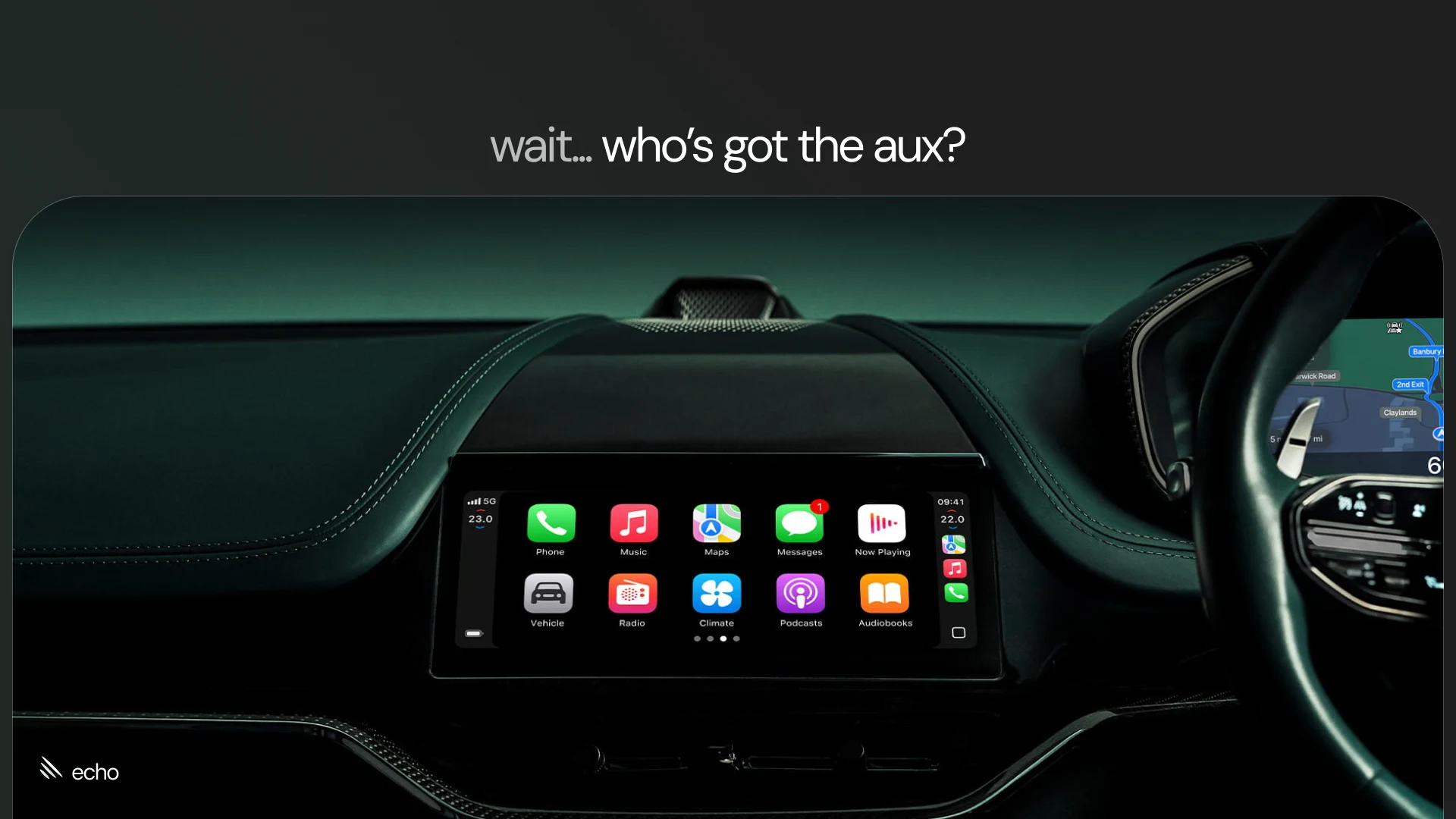
A simple, visual slide displaying Apple CarPlay highlighting how shared moments end without platform-agnostic sharing.


 Marketing
 Where I Went Wrong
My first version of Echo synced straight into the DJ setups at parties, the gatherings that already pull a crowd. My teammates pushed back: the people who go out are a small slice of what a campus actually is, there are clubs, teams, and whole dorm social worlds that never touch a party. They were right, and it moved me off the idea I'd started with. Letting go of the specific environment is what produced the Echo we actually built, sync among whatever devices are connected, nothing else required. Wherever you already listen is where Echo works.
Outcome
Echo never fully launched. It was built inside a university course, so outside that room the number of people who've actually gathered and listened together on it is essentially zero. What it produced was the exact reaction we were testing for: people who saw it started pitching it to others, unprompted, the moment they understood it. For a product whose whole thesis is belonging, that's the most honest signal there is, not a number we manufactured, but people wanting to pull other people in. The infrastructure is real, novel cross-platform sync with no copyrighted file ever changing hands, built by five people in three months. The only fair test left is the obvious one: put it in a real room, outside a classroom, and see if the pull holds.